
The sun charges your truck. Your truck powers your home.
When the grid goes down, you don't notice. When it's time to go, you're full. Stay or go — you're covered.
Sun. Truck. House. Repeat.
A Bugging Out carport turns the biggest battery you own — the one with four-wheel drive — into your home's backup power plant.
The sun charges it
A solar roof over two full-size trucks makes around 30 kWh on an average day in coastal North Carolina. That's roughly 60–75 miles of driving in an electric pickup or SUV, from sunshine.
The truck stores it
A big electric truck or SUV battery holds around 100 kWh or more — several days of a normal home's power, sitting in your driveway.
The house runs on it
When the grid drops, a two-way charger sends power from the vehicle into your house. Fridge, freezer, well pump, lights, fans and internet stay on.
kWh (kilowatt-hour) is the unit on your power bill. Figures are typical estimates; your numbers depend on panel size, season and vehicle.
Five jobs. One carport.
- Charges your 4x4 from the sun. Everyday driving on sunshine instead of the meter.
- Runs your house in an outage. About three days at normal use, a week or more on essentials.
- Keeps making power with the grid down. Most rooftop solar shuts off in an outage. Ours is planned to keep charging your vehicle so your backup refills itself.
- Sends you off full. If the storm says go, you leave with a full battery — no gas lines.
- Shelters two full-size trucks. Heavy timber posts and beams, built to stand up to coastal storms, with shade, salt-air and hail protection the other 360 days of the year.
Sources: U.S. EIA residential consumption (865 kWh per month, 2024); Ford Intelligent Backup Power estimates.
Heavy timber. Two trucks. Room to spare.
A Bugging Out carport isn't a thin metal canopy. It's a post-and-beam frame of heavy timbers, the way barns and boathouses have been built on this coast for generations, with the solar roof sitting on top.
- Two full-size trucks side by side, with room to open the doors.
- Big timber posts, beams and knee braces — rustic to look at, stout by design.
- Engineered for coastal wind and permitted for where you live.
- Hardware chosen for salt air.
It looks like it belongs next to a farmhouse or a beach house, and it's strong enough to carry a roof of panels through hurricane season.
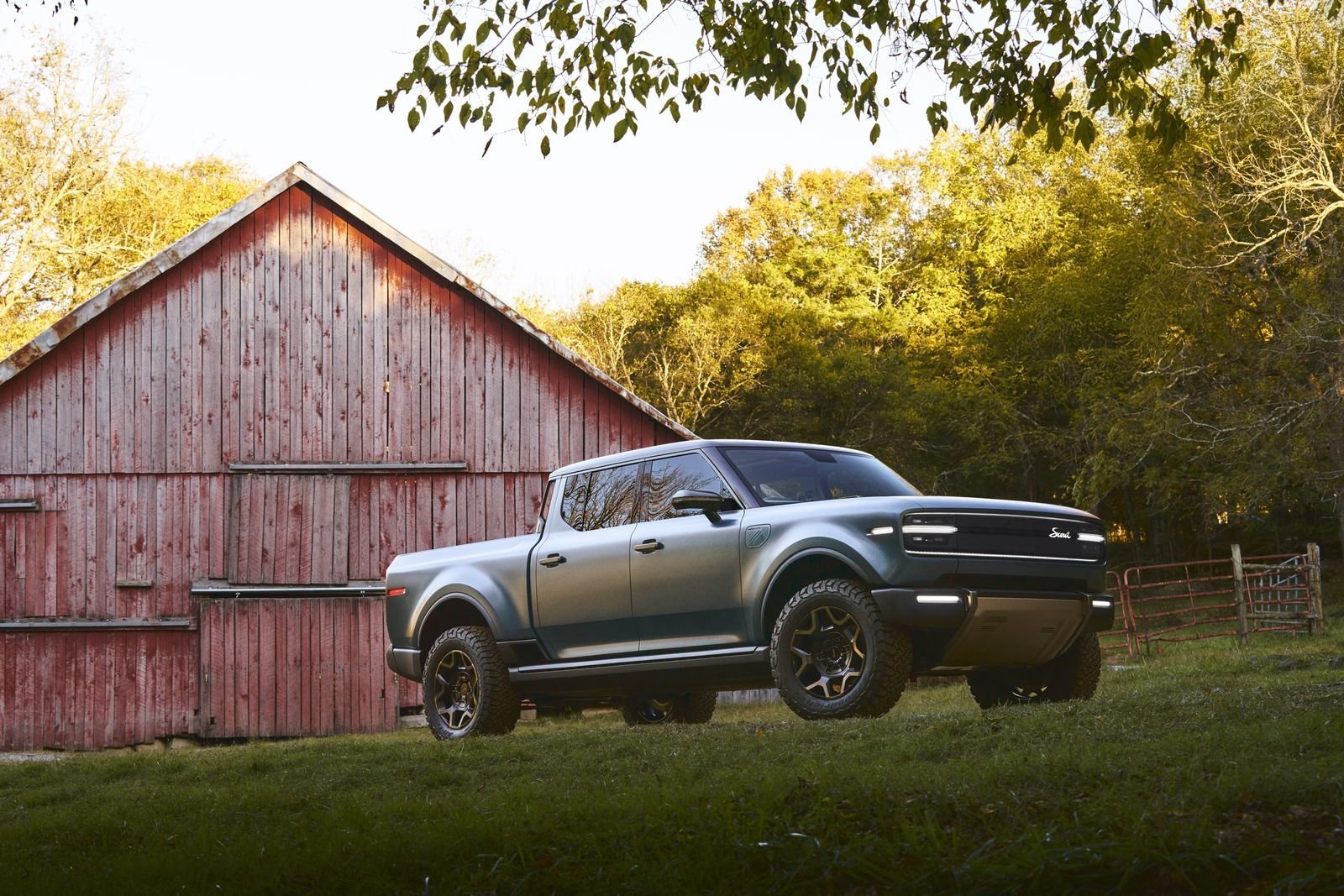
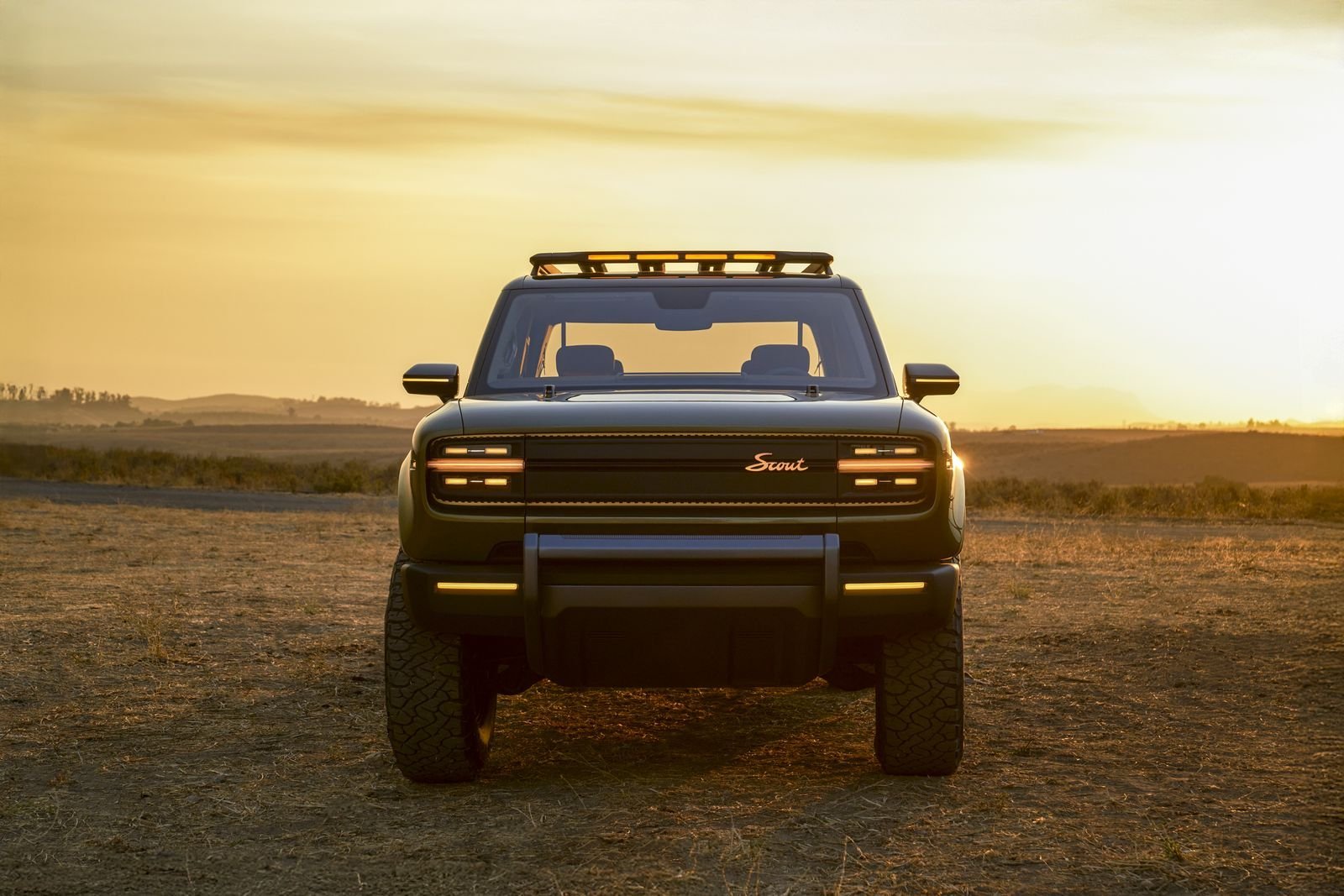
Made with the Scout in mind
Scout Motors is building its Traveler SUV and Terra pickup in Blythewood, South Carolina, and has announced two-way charging on both. That's the exact trick a Bugging Out carport is built around: park it, charge it from the sun, and let it carry the house through the storm.
Add the Harvester version, with a small onboard gas generator that recharges the battery, and you've got a truck that can keep a house going and still drive out of town.
Can a Scout power your house?Bug in. Bug out. Either way, you're covered.
Riding it out
Staying home through an outage is called "bugging in." Your vehicle runs the house, the sun refills the vehicle, and you're not hauling gas cans to a generator.
Getting out
"Bugging out" means leaving with what you need. The truck has been sitting on a solar charge, so you roll out full while others look for gas.
Every other day
Most days are boring days. The carport just charges your 4x4 and keeps the sun, salt and hail off it.
Built where the storms hit
Bugging Out Solar comes from the Outer Banks of North Carolina, where hurricanes, nor'easters and long outages come with the territory. The same people run Beach 4x4, putting 4x4s on the Outer Banks sand every day, and the Carolina Auto Program, where shoppers drive off-road 4x4s on the beach before they buy.
We think the electric 4x4 is about to become the most useful thing a coastal family owns: a beach vehicle, an evacuation vehicle and a home battery in one. The carport is what ties it together.
Straight answers
What is a Bugging Out Solar carport?
A heavy-timber carport with a solar roof, big enough for two full-size trucks, built to do two jobs: charge the electric 4x4 parked under it, and work with a two-way charger so that vehicle can run your house when the power goes out.
How long can a vehicle power my house?
A big electric truck or SUV battery holds roughly 100 kWh or more. The average American home uses about 29 kWh a day, so a full battery runs a normal house for about three days, and a week or more if you stick to essentials. Sunny days add more back.
Does regular rooftop solar work in a power outage?
Usually not. Most grid-tied solar systems shut off automatically when the grid goes down, so they don't send power onto lines crews are repairing. A system has to be designed for backup to keep you running.
Which vehicles can power a house?
The list is growing fast. Ford's F-150 Lightning has offered home backup since 2022, Scout Motors has announced two-way charging for the Traveler and Terra, and Rivian has announced vehicle-to-home for the R2. Always check the maker's current details for your exact model.
What else do I need besides the carport?
A two-way (bidirectional) charger and a transfer switch, which safely separates your house from the grid before the vehicle feeds it. Some automakers sell these as a home kit. We plan the whole package around your vehicle.
Do you serve the Outer Banks and Hampton Roads?
That's home. We're on the Outer Banks of North Carolina, where hurricanes and long outages are part of life, and we're happy to talk with anyone in coastal North Carolina and Virginia.
Tell us about your place
What you drive (or plan to), where you live, and what you want to keep running when the power goes out. We'll come back to you with what a Bugging Out carport would do for you — no pressure, no runaround.
We answer every message ourselves.